My Hitachi Odyssey
A friend of mine once described carburetor tuning as a ‘Dark Art’, and after my experiences with Hitachi carbs, which drew me deeper into the world of bike repair, I would have to agree.
Hitachi carbs – ‘you have to love ‘em – you HAVE to! They won’t tolerate anything less’…and as I found out, that’s true!
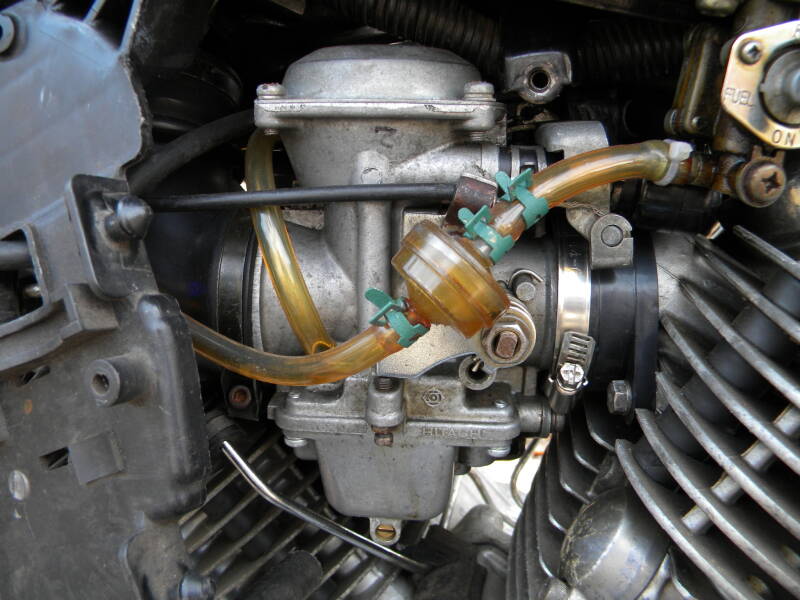
Once Upon a Time, my 1985 Yamaha Virago XV700 started running really rich, black sooty plugs and all. After trying to adjust them, I took the carbs out, cleaned them and when I tried to set the float height on the bench, it kept overflowing through the carb throats.
No matter how exactly I set the float height, which is spec’d out to 19mm from the bottom of the floats to the top of the main jet boss, they would overflow. I used the clear-tube method and would watch the fuel level as it entered the carbs, start filling and climb up the tube, get to the seam between the bowl and the carb body where it’s supposed to be, and keep on going, eventually spilling out the carb throat.
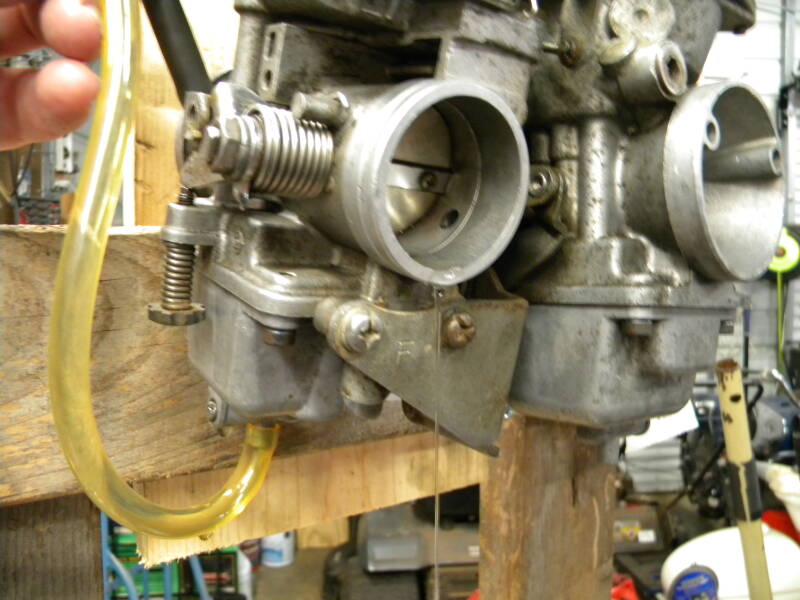
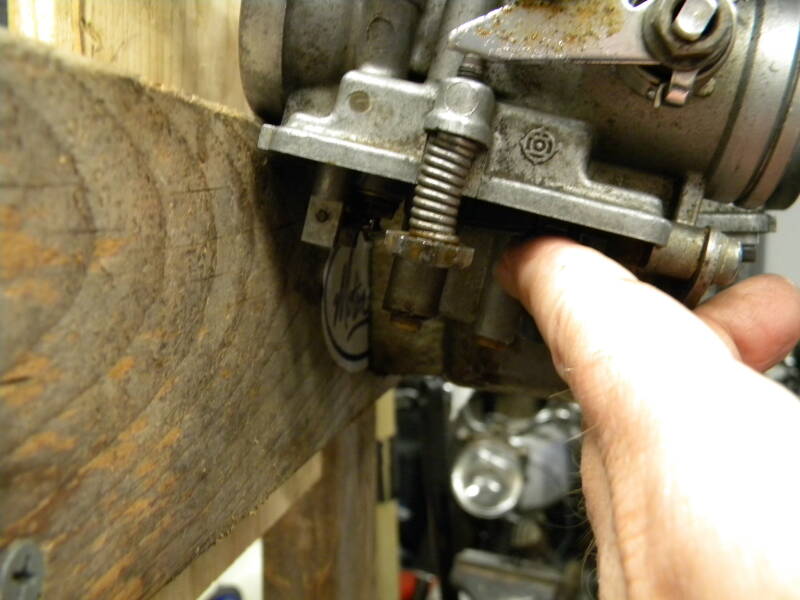
Again and again I would check the float height, check for a missing bolt, a hole or some other way or means that would allow the fuel to escape past the top of the float bowl and just could not figure out WHY the floats were not shutting off the flow of fuel. I even tested them by starting the fuel through the inlet tube and gently raising the floats with my finger to see if the needle and seat were sealing properly, and they did. Turn on the fuel and let the bowls fill naturally, and they overflowed. It drove me crazy!
After about two weeks of this aggravating, frustrating behavior I contacted two noted bona-fide Hitachi carb experts who informed me that these Hitachi carbs on these Viragos were – well, let’s just say we all agreed that they were ‘poorly designed’.
Now, here’s where you can point fingers if you like and tell me the obvious – “Follow the Instructions in the Manual!” – but there is more to it than setting a float height at the correct level, at least in these Viragos as confirmed by my two sources.
The manual states the floats are to be set at 19 millimeters from the bottom of the floats to the top of the jet boss when the carbs are upside down – I did that. Over and over and over. On the bench, the floats did not seal and it overflowed - over and over and over. I also tried setting the float height at 19mm with the carbs at an angle, with the float tang just resting on the needle – nope, no good.
Finally reading the manual word-for-word, the manual states the float height must be set at 19mm with the bike RUNNING, which would entail taking them out, adjusting the float tangs, putting it back in and starting the bike EACH time you needed to adjust the float height. So yes, I assume full responsibility for being lazy and thinking I could simply adjust the float height on the bench, it would reach the proper level and shut off the fuel flow, and everything would be great.
What the manual does NOT mention though, or at least the nearest we could figure out, is that SOME how the flow of fuel THROUGH the carbs with the bike running sets the fuel level: and setting the floats at 19mm on the bench is irrespective of the amount of fuel allowed into the carbs while it’s running. Did you get all that? I’m still trying to wrap my head around that one…that float height has nothing to do with the amount of fuel going into the carb bowls! I know what you’re thinking: ‘but that’s the needle and seat’s job’, right?
Nope; apparently not with these Hitachi’s. Sure, the floats drop, lets the fuel IN, and the floats rise, and all things being equal the floats shut off the flow of fuel - but on the bench without these carbs on a running bike, it will overflow. It comes up through the needle in the main jet. And I don’t know why!
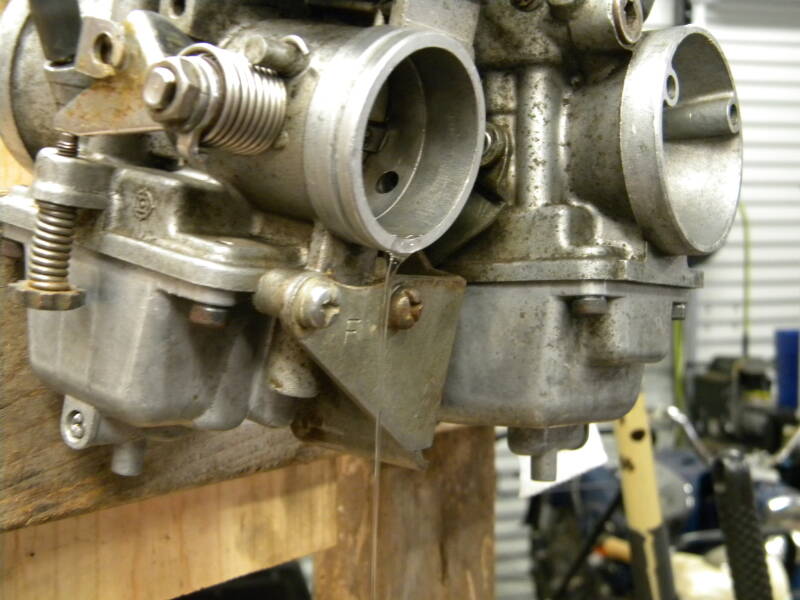
But now the weird part: after gaining all this insight to Hitachi carbs, we set the floats at 19mm, put them back on the bike, and it started and ran like a Champ! The clear tube I was using to measure the fuel level in the carb with the bike running was spot-on to where it should be as indicated in the manual, plus-or-minus 1 or 2 millimeters from the carb-bowl seam.
Turn the bike off with the carbs ON the bike – and here’s the weird part – the floats rise and cut off the flow of fuel. And it does not overflow. Take the carbs off, put them on the bench, and it does. Why it does this is still a mystery to me. But the now-adjusted carbs are back on the bike, it runs great, and I now have a deeper understanding of Hitachi carburetor eccentricities. To me, tuning these Hitachi’s is like balancing a penny on a knife edge – you can do it, but it will test your patience, Grasshopper!
I don’t know – maybe I’m an idiot when it comes to cleaning, rebuilding and synching carbs. Maybe I don’t know anything about fixing carburetors. After all, I am by no means a professional mechanic or carb guru. But I have done enough of them to understand how they work, and on the bench the floats should have shut off the flow of fuel into the carbs, but they didn’t. And I, and others with more knowledge than me, can’t explain why.
Like I said - A Dark Art.
Create Your Own Website With Webador